CBD for Physical Discomfort: What Wording Is Safe and Honest?
People looking for help with sore muscles, stiff joints or everyday aches often run into confident-sounding CBD claims. A bottle may promise “relief,” a product page may describe “powerful pain support,” and a review may say it worked overnight. Those phrases can blur the line between a customer’s personal experience and evidence that a product treats a health condition.
For shoppers—and for anyone writing about supplements—the safer approach is to be specific about what is known, what is claimed and what remains uncertain. CBD is short for cannabidiol, a compound found in cannabis and hemp. It is not the same as THC, the cannabis compound most associated with intoxication, though some CBD products may contain THC.
This guide explains how to discuss CBD for physical discomfort without promising a cure, how to read batch-specific certificates of analysis (COAs), and why “THC-free” deserves a closer look. It also covers the difference between broad-spectrum, full-spectrum and isolate products, the so-called entourage effect, and the price information missing from the scraped article.
Start With Careful Wording About Physical Discomfort
“CBD may help physical discomfort” can sound like a medical promise if it is presented as an established fact. The evidence for CBD varies by condition, product and dose, and research on over-the-counter CBD products is limited. A consumer’s report that a balm felt soothing is not proof that CBD treats pain, inflammation or an injury.
In the United States, supplement claims are subject to rules against misleading advertising. A company cannot avoid those rules by putting a disclaimer at the bottom of a page if the main message still promises to treat a disease or symptom. The Food and Drug Administration (FDA) has not approved over-the-counter CBD products as treatments for general physical discomfort.
Examples of more careful wording
-
Instead of: “CBD cures joint pain.” Use: “This product contains CBD; evidence for CBD products as a treatment for joint pain is not established.”
-
Instead of: “Fast, lasting pain relief.” Use: “Some customers describe the topical as soothing. Individual experiences vary, and this product is not a proven pain treatment.”
-
Instead of: “Reduces inflammation.” Use: “The product is marketed for post-activity comfort; that description is not proof that it reduces inflammation.”
-
Instead of: “Doctor-approved CBD for arthritis.” Use: “Check whether the named clinician actually evaluated this specific product, and avoid implying FDA approval unless the FDA has granted it.”
Good writing does not have to sound chilly or evasive. It can say what is in the product, how it is used, what testing is available and what customers report—while clearly separating those points from proven medical benefits.
What “FDA CBD Approval” Does—and Doesn’t—Mean
The FDA has approved a prescription medicine containing a purified form of CBD for certain seizure disorders. That approval applies to that specific prescription drug and its labeled uses. It does not mean that the FDA has approved CBD oils, gummies, creams or other retail products for pain or everyday discomfort.
The 2018 Farm Bill helped bring hemp products into wider public view by removing hemp from the federal list of controlled substances, subject to the law’s definition of hemp. That definition generally includes cannabis with no more than 0.3% delta-9 THC by dry weight. The change helped fuel mainstream adoption, but it did not give every hemp-derived product FDA approval or establish that every product is safe, effective or accurately labeled.
Consumers should also remember that CBD can interact with medicines and may cause side effects. If you take prescription drugs, are pregnant or nursing, or have a medical condition, ask a qualified health professional before using it. A CBD product should not replace care for an injury or persistent symptoms.
Broad-Spectrum, Full-Spectrum and Isolate: A Plain-English Guide
These terms describe the mix of cannabis-derived compounds a product is intended to contain. They are useful starting points, not proof of what is actually in the bottle. Check the label and the batch report rather than relying on the product name alone.
Type What it usually means What to checkFull-spectrum
Intended to contain CBD plus other hemp compounds, including some THC within applicable limits.
Review the COA for the measured THC amount. “Within the legal hemp definition” does not mean there is no THC.
Broad-spectrum
Intended to include CBD and some other hemp compounds, with THC removed or reduced.
Do not assume “broad-spectrum” means zero THC. Look for a batch result and the lab’s reporting limit.
CBD isolate
Intended to contain CBD without the other cannabis compounds.
Check the CBD amount and whether the report tests for THC and other contaminants.
The Entourage Effect, Without the Hype
The “entourage effect” is the idea that cannabis compounds may have different effects when used together than when used alone. In plain terms, it is a proposed interaction among compounds such as cannabinoids and terpenes. The idea is often used to market full-spectrum products, but it should not be presented as settled proof that one type works better for physical discomfort.
If a brand says its formula delivers a stronger entourage effect, ask what evidence supports that claim for the product being sold. The presence of multiple compounds on a lab report does not, by itself, prove a health benefit.
“THC-Free” and Drug Testing: Read the Fine Print
“THC-free” is a high-stakes claim for people subject to workplace or other drug testing. A drug test may look for THC or its metabolites, and results can depend on the test, a person’s use pattern and other factors. Using a CBD product is not a reliable way to avoid a positive result.
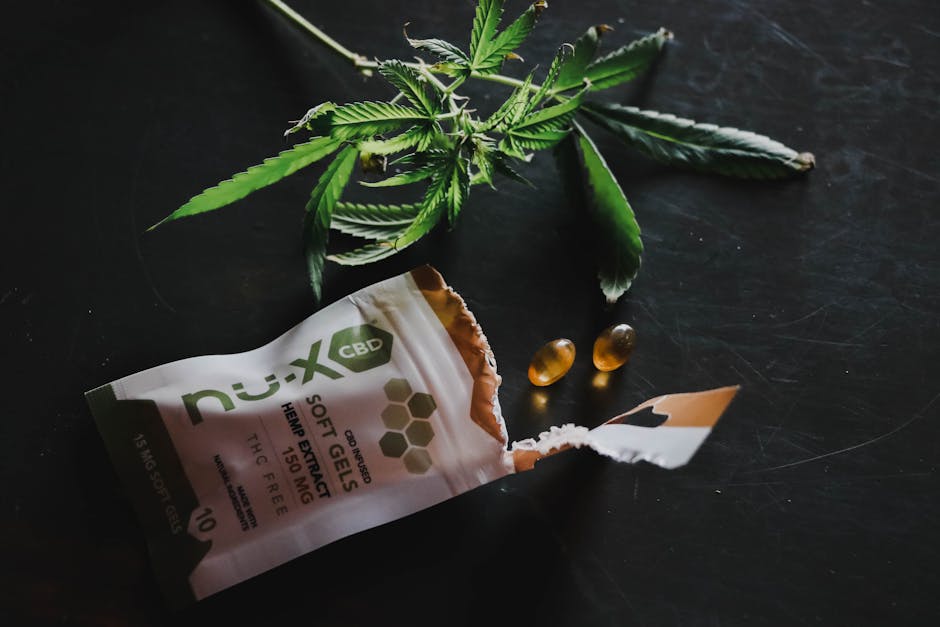
Even if a product is advertised as THC-free, trace THC may be present because of manufacturing variation, contamination or limits in testing. A COA that reports THC as “not detected” means the lab did not detect it above that test’s reporting threshold; it does not necessarily prove absolute zero. If a job or program has strict testing rules, the lowest-risk choice may be to avoid CBD products unless the relevant authority or clinician advises otherwise.
How to Check a Batch-Specific COA
A certificate of analysis, or COA, is a laboratory report showing test results for a sample. “Batch-specific” means the report is tied to the lot number on the product you are buying—not just a generic sample from an earlier production run. A COA is useful evidence about the tested sample, but it is not a guarantee that every bottle is identical or that the product treats a condition.
A practical COA checklist
-
Match the batch. Find the lot or batch number on the package and confirm it matches the COA. If it does not, ask the company for the correct report.
-
Check the lab. Look for the laboratory’s name, report date and contact details. An independent lab is preferable to a report with no identifiable testing source.
-
Review cannabinoid results. Check the measured CBD and THC amounts, the units used and whether results are for the product as sold or another basis.
-
Read “not detected” carefully. Find the method’s detection or reporting limit. “Not detected” is not the same as proving there is no trace amount.
-
Look for contaminant testing. Depending on the product, reports may include pesticides, heavy metals, residual solvents and microbial testing. A cannabinoid panel alone does not cover all these concerns.
-
Check that the report is complete. A cropped image or summary graphic may leave out important details. Ask for the full report if key methods or results are missing.
Ask About Lab Testing and Refinement Steps
Testing matters at more than one point in production. A responsible company should be able to explain how it checks incoming hemp, the extract after processing and the finished product. Ask whether the final formula—not just the raw extract—was tested, and whether the report corresponds to the current batch.
Refinement can change the contents of an extract. For example, steps used to remove unwanted compounds may also affect the amounts of cannabinoids or other plant compounds. If a product is described as broad-spectrum or THC-free, ask how the company verifies that claim after refinement and whether the finished batch was tested for THC.
Be wary of polished phrases such as “triple purified” or “pharmaceutical grade” when no method, standard or independent result is provided. Clear, checkable details are more useful than a string of impressive-sounding process terms.
The Missing Price Problem
The scraped article referenced for this topic lists no product prices. That is a real gap for shoppers: without prices, it is difficult to compare products or judge whether a high price reflects a larger amount of CBD, stronger testing documentation or simply branding. Do not invent a price or assume a product is affordable based on a description.
Before buying, check the seller’s current listing for the package size, total CBD per package, serving size, shipping charges and any subscription terms. Comparing only the sticker price can mislead. A product with best USDA organic CBD more CBD may cost more upfront, but the useful comparison is the amount of CBD per package—and, where possible, the cost per labeled serving—alongside the quality of the testing information.
A Better Standard for CBD Product Descriptions
For consumers, the best product page is not the one with the biggest promise. It is the one that clearly identifies the product type, gives a current batch-specific COA, explains testing and refinement without exaggeration, and states what the company does not know. For writers, the same principle applies: report the claim, then check whether the evidence supports it.
-
Describe CBD content and product format accurately.
-
Do not call a retail product an FDA-approved treatment for physical discomfort.
-
Explain that full-spectrum products may contain THC and that “THC-free” claims need batch-level evidence.
-
Keep customer anecdotes separate from clinical evidence.

-
Include current prices only when verified, and say plainly when prices are unavailable.
CBD may interest people looking for options for everyday comfort, but honest wording starts with limits. A transparent label and a batch-matched lab report can help answer what is in a product. They cannot turn an unproven supplement claim into a proven treatment—or make drug-testing risk disappear.