What Are Organoids and Why Do Labs Use Them?
If you've ever wondered how scientists study complex human tissues in the lab without experimenting directly on people, the answer often lies in a fascinating tool called organoid models. These "mini-organs" provide a remarkable way to mimic the architecture and function of real tissues, allowing researchers to explore biology in a more controlled and insightful manner.
Understanding the Cellular Symphony: Cells as Communication Networks
To grasp why organoids are so valuable, it helps to think about cells as members of an elaborate communication network. Each cell sends, receives, and processes signals, much like people exchanging messages at a busy conference.
- Biological messengers: The messages are often peptides—small protein fragments—secreted or presented by cells to influence other nearby or distant cells.
- Signal interfaces: The "mailboxes" or receptors on the receiving cells are specialized proteins that recognize these peptides, enabling precise communication.
- Receptor selectivity and specificity: Just like different email addresses ensure messages reach the correct recipient, receptor proteins have evolved to selectively bind particular peptides and trigger specific cellular responses.
This networked conversation governs everything from cell growth to immune defense, and understanding it is essential for dissecting human health and disease.
What Are Organoids?
Organoids are lab-grown clusters of cells that self-organize and differentiate to form Have a peek at this website miniature, simplified versions of actual human organs. Although smaller and less complex than full organs, these tissue-like cultures capture many critical features of the organ’s structure and function.
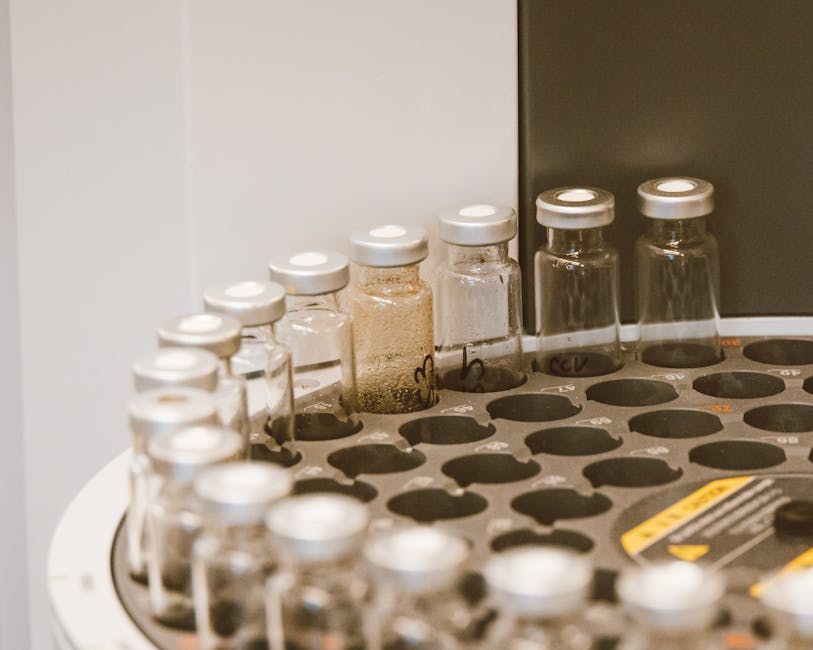
For example, researchers have developed organoids representing the brain, intestine, liver, and endocrine hormones lung. These models replicate the layered architecture of cells, their communication patterns, and functional outputs such as secretion of hormones or enzymatic activity.
How Are Organoids Made?
Scientists start with stem cells or progenitor cells—cells with the potential to become many different specialized cell types. By providing the right cocktail of growth factors and environmental cues, they encourage these cells to grow in three-dimensional cultures that encourage self-organization.
Over days to weeks, these cells divide, differentiate, and arrange themselves into organized micro-structures that resemble the tissue of origin. This process mimics natural organ development, albeit on a smaller scale.
Why Use Organoid Models? The Power of Controlled Systems
Traditional cell culture methods often involve flat monolayers of cells. While useful, these 2D cultures lack the complex spatial relationships and cell diversity seen in real tissues. Organoids overcome these limitations by creating a more physiologically relevant environment.
Here’s why labs love organoids:
- Tissue-like heterogeneity: Organoids contain multiple distinct cell types arranged in 3D, reproducing the diversity and patterns of real tissues.
- Functional communication networks: Cells within organoids interact through peptide signals and receptor interfaces, faithfully mimicking biological communication.
- Controlled experimental systems: In the laboratory, organoids serve as precise test beds where variables can be manipulated—such as specific gene expression or exposure to drugs—while maintaining complex tissue architecture.
- Reduced reliance on animals and human samples: Organoids provide ethically favorable models for studying human biology in ways not possible with animal models alone.
Organoids vs. Purified Receptor Systems and Biochemical Assays
Before organoids became mainstream, biologists often relied on purified receptor systems and biochemical assays to study cell signaling. Let’s define these briefly:
- Purified receptor systems: These involve isolating specific receptor proteins—usually from cells or recombinantly produced—and analyzing them in highly controlled conditions.
- Biochemical assays: Laboratory methods that measure activity, binding, or signaling events triggered by receptors and ligands, providing precise quantitative data.
While purified receptor systems and biochemical assays offer exceptional control and molecular-level insights, they strip away the complex cellular context where receptors function. Organoids fill that gap by preserving the tissue environment, letting researchers see how receptors and peptides interact in a realistic setting.
The Role of Receptor Selectivity and Specificity in Organoid Research
At the heart of cellular communication is receptor selectivity—the receptor's ability to preferentially bind certain signaling molecules—and specificity—the capacity to trigger targeted downstream effects.
Organoids present a powerful platform for studying these principles because:
- They express the full repertoire of receptors and peptides found in vivo, allowing for natural competition and cooperation among signaling pathways.
- They enable observation of how receptor signaling affects cell behavior within a 3D microenvironment, revealing insights lost in purified or 2D assays.
- Manipulating receptors or peptide signals in organoids can uncover mechanisms of tissue development, disease progression, or drug responses.
Example: Investigating Peptide-Receptor Interactions in Intestinal Organoids
Suppose a researcher suspects a peptide hormone influences gut lining regeneration by binding a particular receptor. Using intestinal organoids, they can:
- Apply the peptide to the organoids and measure proliferation or differentiation markers.
- Knock out or block the candidate receptor and observe changes in response.
- Compare findings with biochemical assays where purified receptors are tested with the peptide to confirm direct binding and signaling.
This complementary approach leverages both controlled molecular-level assays and the tissue-like complexity of organoids.
What Organoids Do Not Prove
Despite their many advantages, organoids have limitations:
- They are simplified miniature versions—certain aspects of full organ systems, such as blood flow, immune cell interactions, or neural inputs, may be missing or underrepresented.
- Results from organoid experiments do not always translate directly to human patient outcomes; in vitro findings need validation in whole organisms or clinical settings.
- Organoid heterogeneity and variability can sometimes complicate reproducibility across labs.
In short, organoids are powerful models, but they do not fully replicate the entire human body or all its complexities.
Conclusion: Organoids as a New Frontier in Biomedical Research
Organoid models have revolutionized the way scientists study human tissues by combining the complexity of real organ structures with the control of laboratory systems. They allow detailed exploration of cellular communication networks—where peptides act as biological messengers and receptors serve as selective signal interfaces—in a context much closer to actual human biology than traditional assays alone.
By integrating organoids with purified receptor systems and biochemical assays, researchers can decode the intricate language of cells with greater clarity. This synergy promises faster drug discovery, better understanding of diseases, and novel regenerative medicine strategies, making organoids an indispensable tool in biomedical science.
Next time you read about a breakthrough in brain research or cancer drug testing, there's a good chance organoid tissue-like cultures played a key role behind the scenes!
